
Someone asked me recently why Public Media Network even needs to exist. YouTube is free. Facebook reaches everyone. Why bother?
It’s a fair question. And honestly, it’s one I don’t mind answering, because the people asking it aren’t wrong about the tools. They’re just working with an incomplete picture.
We use YouTube. We use Facebook. Public Media Network posts content on both platforms regularly, because that’s where people are, and reaching people matters. If you’ve ever learned about a city commission meeting or a community talk show through our Facebook page, or watched a program on our YouTube channel, those platforms did exactly what they’re supposed to do. I’m not here to tell you they don’t work.
But here’s what I’ve come to understand after years of working in community media: the question was never really about reach. It’s about who owns the infrastructure.
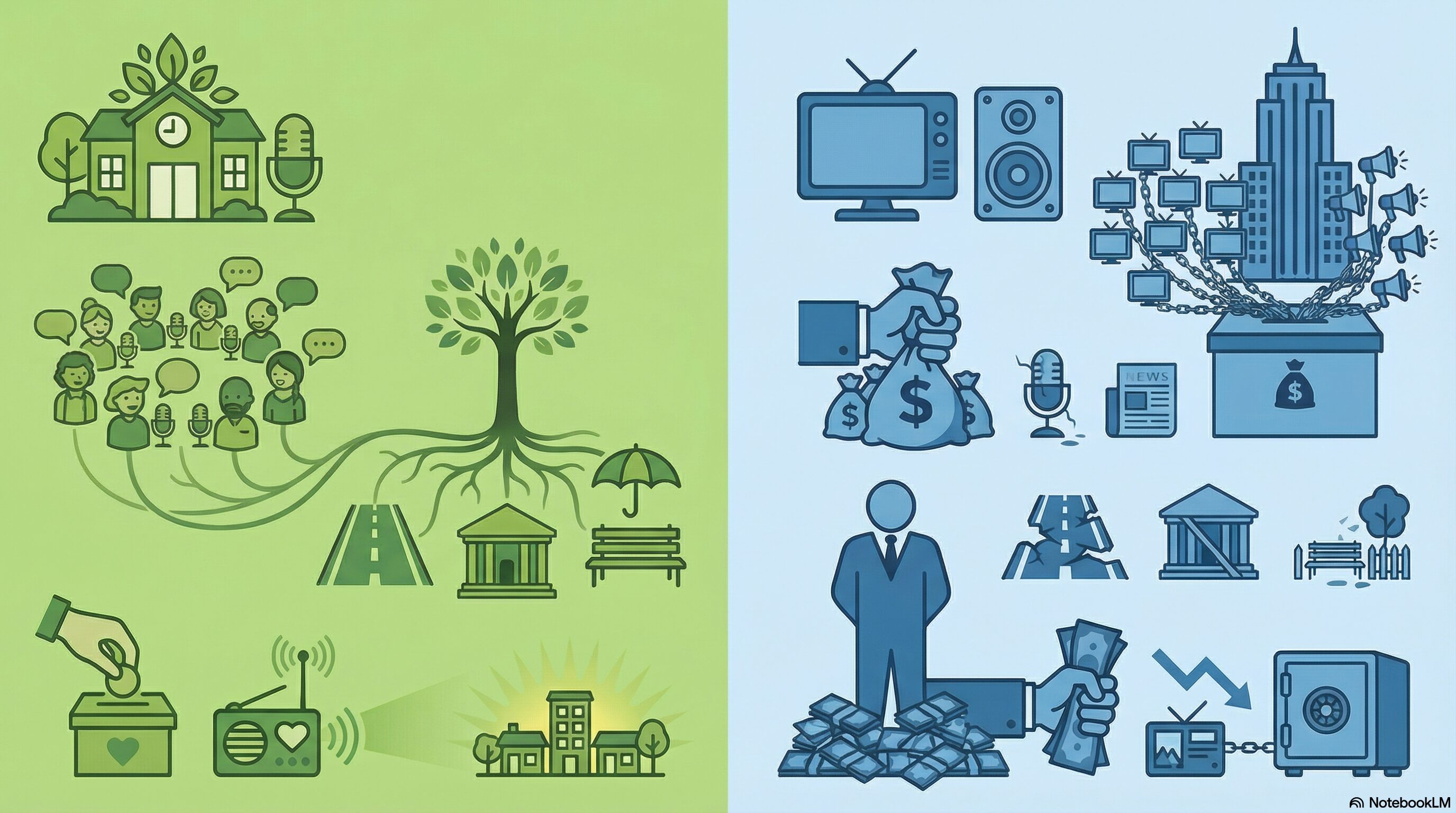
When you post content to YouTube or Facebook, you’re a tenant. The platform sets the rules. Algorithms decide what gets seen. Terms of service can change overnight. Content gets removed, buried, or monetized in ways you never agreed to. The infrastructure belongs to shareholders, and it’s optimized for their interests, not yours, and not your community’s.
Public Media Network exists because communities need infrastructure they actually own. A place where local voices, public meetings, and civic conversations are preserved and accessible on the public’s terms, not a platform’s. Where a county commission meeting recorded five years ago is still viewable today as it was the day it aired. Where a resident with something to say has access to production resources and a channel that can’t be algorithmically suppressed.
That’s not nostalgia for an older media model. It’s the same logic behind public libraries, public parks, and public roads. We don’t expect those things to compete with Amazon, private gyms, or Uber on market terms. We fund them because some infrastructure exists to serve everyone, regardless of whether it turns a profit.
Community media is that kind of infrastructure. And like libraries and roads, it requires public investment to survive. In many communities, that investment has historically come through a portion of franchise fees and PEG fees, a small percentage of cable franchise revenues set aside specifically to support public, educational, and government access channels. Those fees are under increasing pressure as the cable landscape changes. The policy decisions being made right now will determine whether community media infrastructure exists in ten years.
That’s a civic question, not a media industry question. And it deserves a public conversation.
In the meantime, we’ll keep posting to YouTube and Facebook, because reach matters. But we’ll also keep building and maintaining the infrastructure your community owns. Because that matters more.


