I still get chills when I show somebody around the community access center. It has changed a lot through the years, but one thing remains the same.
When someone new comes in here, they light up. Seeing the Vidcast studio, the big cameras, feeling the chill of the server room and seeing the lights in the studio…
It’s not just that people are impressed by the equipment. It’s that they can feel the possibilities.
Most nonprofits are started because there is a problem that needs to be solved – to fill a need that exists in the community.
Do you know what problem Public Media Network was created to solve?
The City of Kalamazoo originally made a deal with Fetzer Cablevision to dedicate four cable channels for community use, plus funding to support those channels. The idea was to put media in the community’s hands to facilitate social change. To create a future where the power of media didn’t just belong to big networks or polished professionals – it belonged to the people.
Years later, and we’re still fighting for that same ideal.
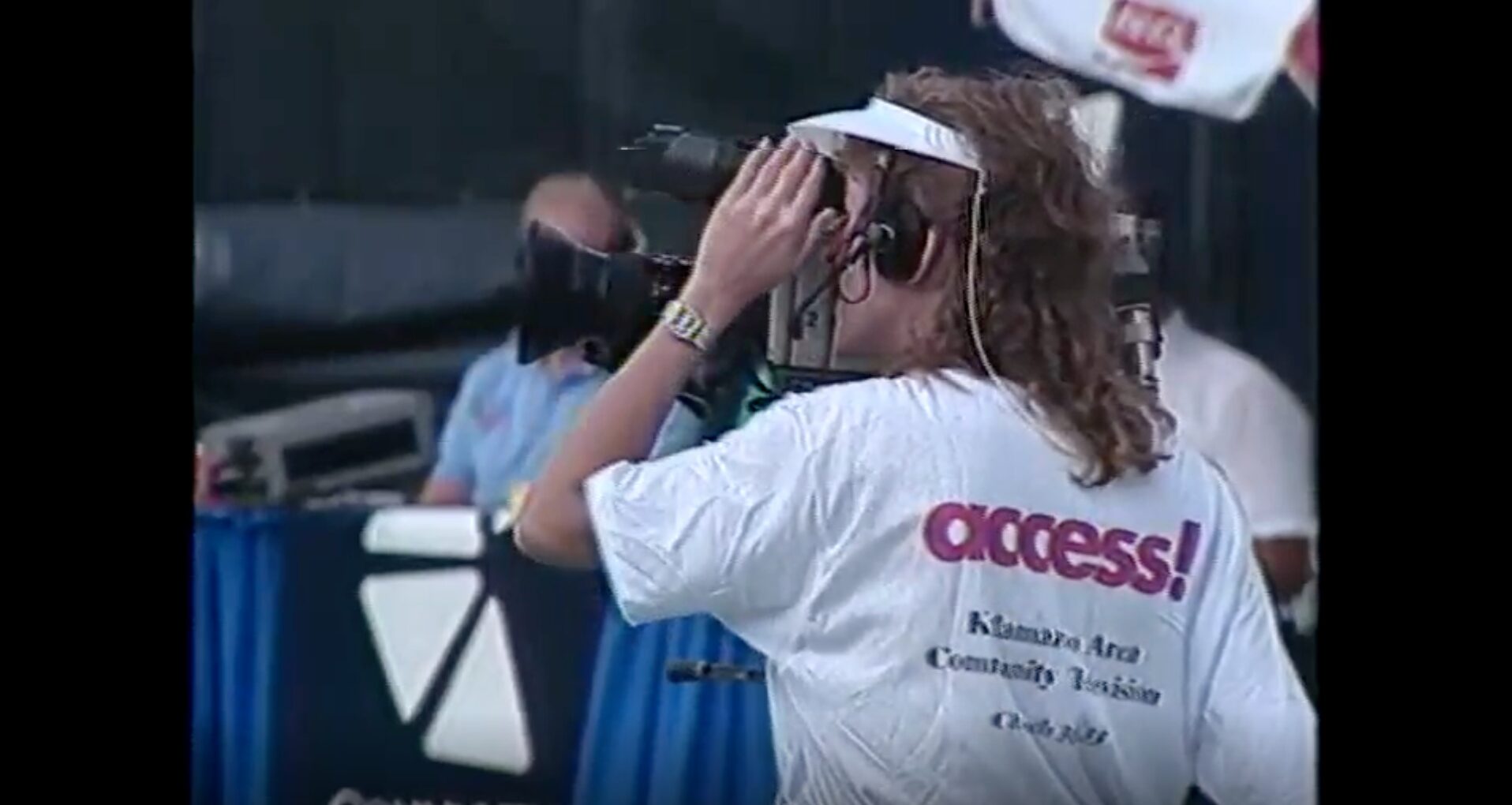
If you lived in the Kalamazoo area during the 80s or the 90s, you might remember when Public Media Network was called the Community Access Center and was located on East Crosstown Parkway.
In the first year of operation – back in 1983 – over 1,000 people were trained in media, and seventy hours of programming was produced per week. Over 30 community groups produced programming.

Back then, media access centers like PMN became places where people came together and worked with those from different neighborhoods, different faiths, and different political beliefs. They became active community centers.
I don’t need to tell you that the world has changed enormously since then. Cameras are smaller – so small you likely have one in your pocket – and anyone can post anything to the internet at any time.
You may be asking yourself – in a world like this, why do we still need Public Media Network?
The truth is, it’s not really about media. It’s not about cameras, or microphones, or studios. It’s about you.
It’s about community.
The way we share stories has changed. But one thing has never changed – our belief that local people – not just big corporations – should have the power to create media, tell their stories, and speak up about what matters.
You may know a student who went through one of our youth programs, learning to tell their truth through documentaries and storytelling. Or maybe a local artist who used our studios to showcase their work. A senior who learned video editing for the first time. A neighbor who walked in off the street with a question – and walked out knowing they have a voice.

This work matters because it keeps our community connected. It fills in the gaps left by shrinking local news coverage and gives people real, direct access to civic life. If you want to see what’s happening in your city – what your elected officials are saying, what decisions are being made – Public Media Network is the only place you can watch it unfiltered, unedited, and real.
More than 40 years in, we’re still here. Still offering training. Still opening our doors. Still airing the city meetings, the concerts, the neighborhood stories. Still fighting for free speech – not just in theory, but in practice.
That’s the legacy you, our community, has built. And with your help, it’s the legacy we’ll continue.
When you become a monthly donor to Public Media Network, you’ll be preserving a space where free speech is upheld, where community storytelling thrives, and where anyone – regardless of background or experience – can come in and know: This is your story. This is your community. And you deserve to be heard.
That’s a mission worth fighting for. Will you stand with us?
This post was originally sent out in an email. Want to see more stories like this? Sign up for our email newsletter!


