
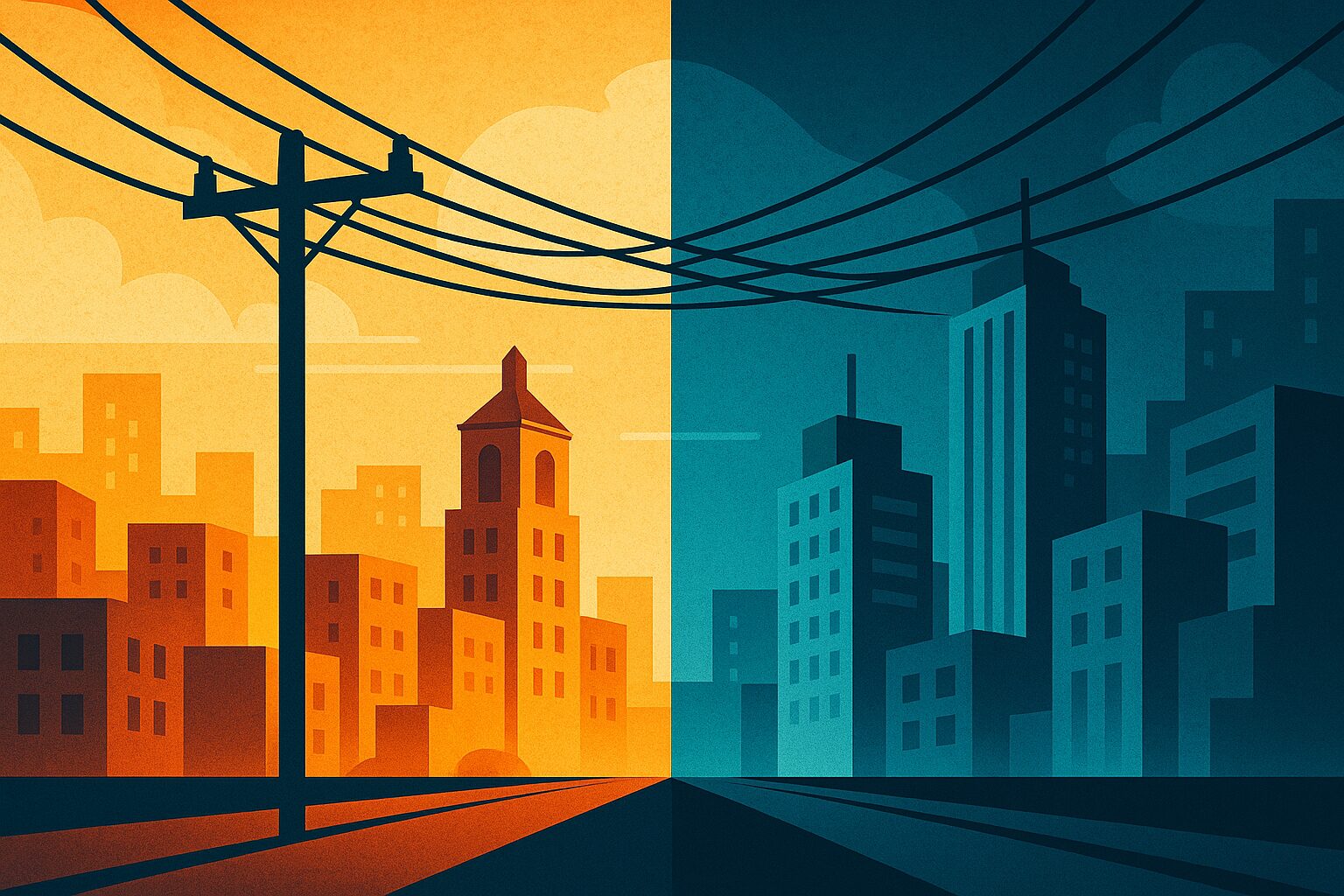
When cable television first came to our communities, companies received permission to use public rights-of-way – to run poles, conduits, and cables on land that belong to all of us. In exchange, they made a promise: to serve the public interest.
That commitment meant more than entertainment. It meant supporting the public’s ability to speak, learn, and stay informed. It meant ensuring residents could watch local government meetings, share their stories, and have access to the tools of media creation. It’s what gave rise to community media centers like Public Media Network, and what makes open, local media possible today.
But that promise is under threat.
A Bill That Redefines “Public Interest”
In Lansing, lawmakers are considering a new streaming bill, House Bill 5123, that would dramatically change how public interest obligations are defined for companies using the public right-of-way.
At first glance, the bill looks like a simple update to Michigan’s 2006 cable law, known as Public Act 480. But beneath the surface, it could strip away critical local funding for community media and government meeting coverage.
Like previous versions (HB 4965-2024), the bill exempts streaming services from the franchise and PEG fee provisions that have long supported local access channels and public programming. As more people shift from cable to streaming, the public interest funding that keeps you connected to local government, community stories, and civic life will continue to decline, with no replacement.
Supporters of the bill call it “modernization.” But there’s nothing modern about removing public oversight or public benefit from companies profiting off infrastructure built with public investment.
The Problem Runs Deeper: PA 480 and Local Control
When Public Act 480 was adopted nearly two decades ago, it fundamentally changed how cable and telecommunications companies were regulated. It removed local franchising authority from cities and townships and centralized it under the Michigan Public Service Commission.
That shift stripped communities of their ability to negotiate agreements tailored to local needs, like ensuring fair funding and high-definition carriage for public, educational, and government access channels or requiring customer service standards that reflect community expectations. It replaced local accountability with a one-size-fits-all state process.
Since then, communities have had far less ability to ensure that the public’s needs, not just corporate priorities, are being met. Now, bills like HB 5123 go a step further, chipping away even more of what little public oversight remains by redefining who is covered and what counts as a “cable service.”
A Hollow Promise
There’s nothing stopping major cable broadband providers who aren’t currently operating under the state cable franchise from simply branding as “streamers” to sidestep their obligations, leaving local governments and community media centers without critical franchise revenue.
That’s not modernization; it’s a rollback that prioritizes commercial interests over community access.
True modernization should create parity, ensuring that any company using public rights-of-way to deliver video or cable-like services, whether through traditional cable, fiber, or internet streaming protocols meets the same public interest obligations. Communities deserve consistency and fairness, no matter how technology evolves.
Modernization should strengthen, not weaken, public benefit. It means updating how municipalities are compensated for use of the public right-of-way and expanding support for public-interest media that keeps communities informed and engaged.
Why It Matters Here at Home
Public Media Network’s ability to cover city and county meetings, provide media training, and share community stories is rooted in that original public interest promise. When companies use our shared infrastructure, the return should serve the people, not just shareholders.
Without these commitments, local transparency and civic engagement suffer. Residents lose access to the meetings where decisions are made about their neighborhoods, schools, and local priorities. Communities lose the ability to tell their own stories through open, community-powered media platforms.
The Path Forward
Modernizing the law shouldn’t mean erasing public obligations, it should mean reaffirming them in a digital age. Whether content is delivered by cable, fiber, or streaming, the principle remains: if you use public space to profit, you should give something back to the public good.
Public interest obligations exist for a reason. They ensure that access to communication, participation, and local information stays open to everyone.
As the debate over HB 5123 continues, we encourage residents to stay informed, ask questions, and make their voices heard. Reach out to your local and state representatives and let them know that public interest media still matters.
Because when our community stays connected, informed, and engaged, everyone benefits.


