
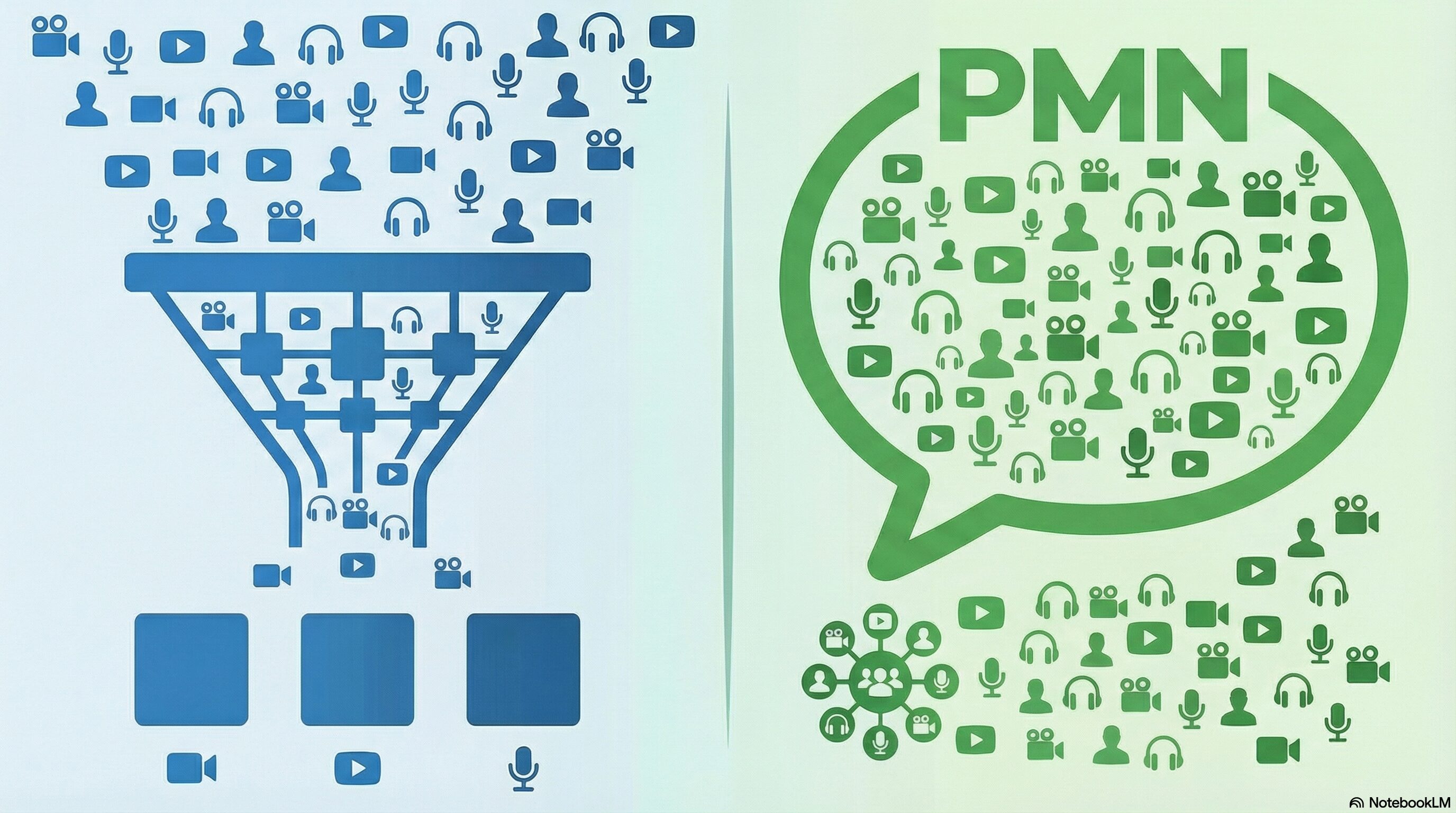
Pick up your phone and you can access more media than any generation before you. News channels, streaming services, podcasts, social media, the options never end. It looks like we have more choices than ever.
But here’s what that picture hides: a small number of large corporations are making most of the decisions about what you see, hear, or read. What gets covered. How stories get told. Whose voices get heard and whose get ignored. The number of channels keeps growing. But the number of people in control keeps shrinking.
This has been happening for a while, but it’s speeding up. As big media companies buy each other up, the variety of who owns our media gets smaller. Local newsrooms get absorbed into large national chains. Decisions about what to cover get made far away from the communities those stories affect. And more and more, those decisions are driven by what makes money and not by what people actually need to know. Coverage gets shaped by what gets clicks and holds attention, not by what matters to the people living in a particular place.
What we lose is accountability. Media owned somewhere else answers to someone else. It doesn’t have to cover your local government, show up for your community, or celebrate the arts and cultural life that makes your town worth living in. It just has to make enough money to satisfy its owners.
This is why community media matters and why public funding for it is so important. Public Media Network is built on a different model. We are local, governed by our community, and answerable to the people who live here. Our platforms are open and built to support real conversation, lift up a wide range of voices, and reflect what life in Greater Kalamazoo is really like. Purpose, not profit, drives what we cover and how we cover it.
Think of it like other public infrastructure. We fund roads, libraries, and parks because our communities need shared spaces to work well together. We need to fund media spaces for the same reason. Spaces where local government is recorded and open to everyone, where community stories get told, where arts and culture get the attention they deserve, and where people can see themselves and their neighbors reflected honestly.
The case for community media has always been that local voices matter. What’s changed is how urgent that case has become. As more media power moves into fewer hands, the platforms that stay rooted in community, that answer to community, become more valuable, not less. They become the places where the real conversations about your city, your township, and your schools can actually happen.
We’re building that here. But community media can’t survive on mission alone. It takes investment from foundations, from local government, and from people like you who understand what’s at stake when a few gatekeepers control most of what we see and hear.

