
I want to say something I believe deeply, and I want to say it plainly.
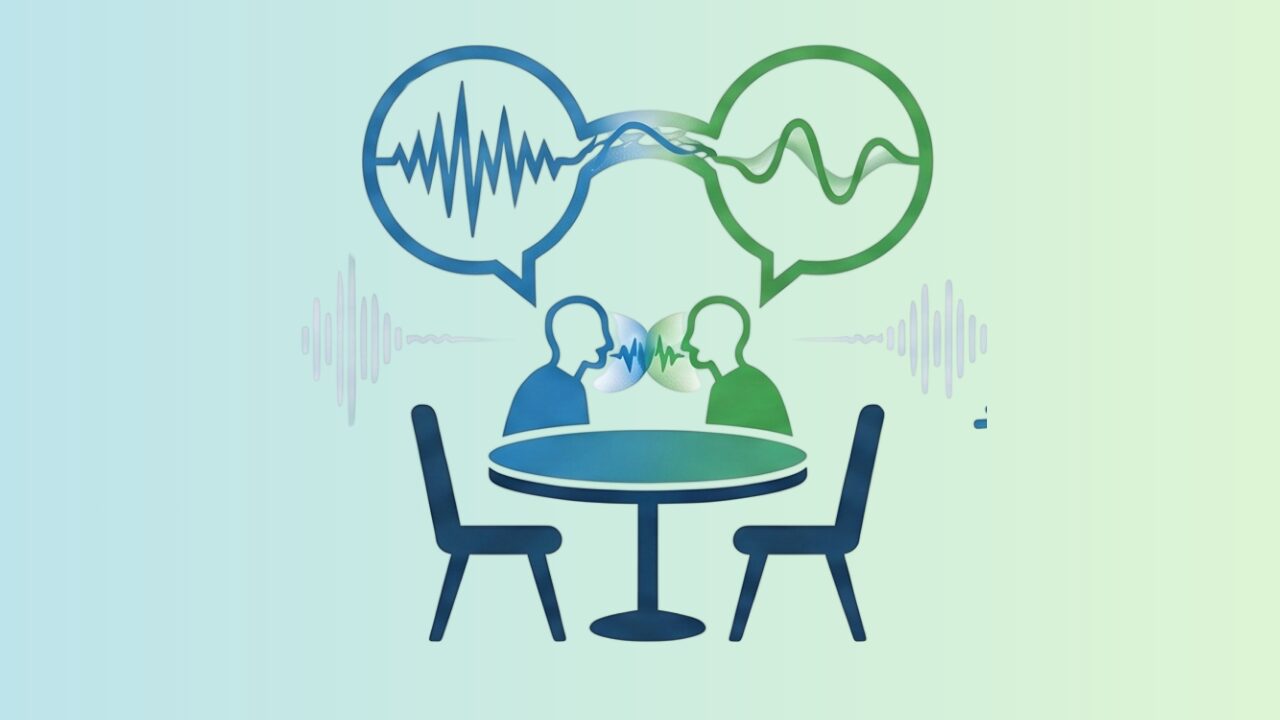
We are living through a moment that requires courage, not the dramatic kind, not the kind that makes headlines, but the quieter, harder kind. The kind that asks you to defend a voice you disagree with. To sit at a table with someone who sees the world differently than you do. To resist the pull toward sides and stay committed to something more difficult: understanding.
That’s what this piece is about.
What’s happening to the information landscape
Over the past two decades, media consolidation has reshaped what communities across America can see, hear, and know about themselves. At the national level, ownership of media across news, entertainment, social platforms, streaming, and radio has concentrated into the hands of a shrinking number of corporations and individuals. The range of perspectives, stories, and ideas that reach most Americans is now filtered through fewer and fewer decision-makers, each with their own interests, incentives, and blind spots.
And those messages dominate. When the same ownership controls what appears across television, digital platforms, print, and social media simultaneously, the sheer volume of that unified voice crowds out everything else. It isn’t necessarily a conspiracy. It doesn’t have to be. Consolidation produces uniformity as a byproduct, not because anyone ordered it, but because the same priorities, the same risk calculations, and the same profit motives produce the same editorial choices at scale.
When a independent outlet closes or gets absorbed, it isn’t just one voice that goes quiet. It sends a signal to every other independent outlet watching. When one media organization caves to pressure, to financial stress, to the demands of a larger parent company with different priorities, it can silence many. Others take note. They pull back. They self-censor. The range of what gets said narrows not just because of what was lost, but because of what everyone else decides is now too risky to say.
Diversity of ownership and control isn’t a media industry concern. It’s a civic one. When many different people and organizations control the platforms where ideas circulate, no single interest can dominate the conversation. When that diversity collapses, locally and nationally, so does the marketplace of ideas. Not all at once, but gradually, quietly, in ways that are hard to see until they’re hard to reverse.
The attacks on independent voices
We are also seeing something more direct: organized pressure on nonprofits, public media, and civic organizations. Pressure that uses the language of patriotism to justify silencing dissent. Organizations are being labeled anti-American not because of what they’ve done, but because of who they serve or what they’re willing to say. Funding is threatened. Legitimacy is questioned. The message is clear: stay in line, or face consequences.
I want to be careful here, because this is not an us versus them argument. It never should be. The moment we frame it that way, we’ve already lost something important. But I do think we have to name what’s happening clearly: when those in power use that power to narrow the range of acceptable voices, everyone loses, including the people doing the narrowing. A community where only certain ideas are permitted to circulate is not a strong community. It is a brittle one.
The harder argument
Here is where I want to push, because I think this is the part that requires the most from all of us.
Protecting free speech and press freedom means defending voices you disagree with. Not just tolerating them but defending them. Because the principle only holds if it applies universally. The moment we decide that free expression matters for people who think like us but not for people who don’t, we’ve abandoned the principle entirely. We’ve just chosen a different set of people to silence.
This is not easy. There are voices in our community, and in the broader public conversation, that I don’t agree with, or find harmful or frustrating. I suspect you have your own list. But a healthy civic culture doesn’t require agreement. It requires the willingness to engage, to listen, to push back with dialogue rather than suppression, and to trust that the process of genuine discourse makes us all sharper and more honest.
Civility is not weakness. It is not capitulation. It is the precondition for any conversation worth having.
commUNITY
Kalamazoo is a community of remarkable diversity of background, of perspective, of lived experience, of belief. That diversity is not a problem to be managed. It is our greatest strength.
When people with different lived experiences sit at the same table, they bring different questions, different knowledge, and different ways of seeing problems that the rest of us might miss entirely. Diversity of lived experience produces diversity of thought. Diversity of thought produces better ideas, stronger decisions, and more resilient communities. This is true in a boardroom, in a township meeting, in a classroom, and in a neighborhood conversation.
When we make space for many voices in our media, in our civic institutions, in our conversations with each other, we push each other toward the best versions of ourselves. We don’t win or lose this together. We grow together, or we don’t grow at all.
The UNITY in commUNITY isn’t sameness. It’s the shared commitment to showing up, engaging honestly, and building something together that none of us could build alone.
What I’m asking
Find the table. Sit down at it even when it’s uncomfortable, even when the person across from you sees the world differently than you do. Engage with curiosity instead of contempt. Ask questions before drawing conclusions. Defend the right of others to speak even when you wish they’d say something different.
And support the institutions, the independent media, the civic organizations, the community spaces, that keep the table open for everyone.
That’s what Public Media Network is here to do. Not to tell you what to think. To make sure the conversation keeps happening — all of it, for all of us.


