
Somewhere along the way, we started treating civic life as a spectator sport.
Not because people stopped caring. Most people care deeply about what happens in their communities. They care about the decisions made at city hall, the changes coming to their neighborhood, the future their kids will inherit. But caring and participating are different things, and the distance between them has grown. Part of that distance is time. Part of it is access. And part of it is that we’ve lost some of the infrastructure that once helped communities make sense of themselves.
That infrastructure isn’t a building or a broadcast tower. It’s the capacity shared across many people and organizations to document what’s happening, explain what it means, connect decisions to consequences, and give residents ways to respond. When that capacity is healthy, communities can navigate complexity together. When it thins, the complexity doesn’t go away. It just becomes harder to see.
The problem isn’t a shortage of content
We live in an era of information abundance. More is published, posted, and broadcast every day than any person could consume in a lifetime. And yet many communities report feeling less informed about local decisions than they did a generation ago, not because less is happening, but because less of what’s happening is being made legible.
This is the sensemaking gap. It’s not new. Communities have always needed more than a feed of events and decisions. They’ve needed ways to understand what those events mean, how they connect to each other, and where residents fit in, not as spectators, but as participants.
What’s changed is the scale. The volume of content has exploded while the infrastructure for civic sensemaking has shrunk. Local newsrooms have contracted. The resources dedicated to covering the day-to-day decisions that shape community life have thinned. The platforms that now dominate how most people encounter information weren’t designed for civic coherence. These platforms were designed for engagement, which is a different thing entirely. Engagement keeps you scrolling. Sensemaking helps you act.
No single organization solves this
It’s tempting to look for the answer as the outlet, the platform, the model that will fix local information ecosystems. But healthy ecosystems don’t have single solutions. They have diversity. Different species filling different roles, each depending on the others, the whole system stronger for the variety.
Community information ecosystems work the same way. What they need isn’t one organization doing everything. They need a range of people playing different roles and those roles don’t belong exclusively to journalists or media professionals. They belong to anyone willing to show up and participate.
Some of those roles look familiar: documenting what happens at public meetings, investigating how decisions get made, reporting on the people and places that shape community life. But others are just as important and far more accessible: convening conversations, sharing stories from your neighborhood, helping your neighbors understand a zoning change or a school board vote, showing up to a public comment period, or simply expressing an opinion in a public forum.
These are acts of civic engagement. They always have been. We just stopped calling them that.
The roles anyone can play
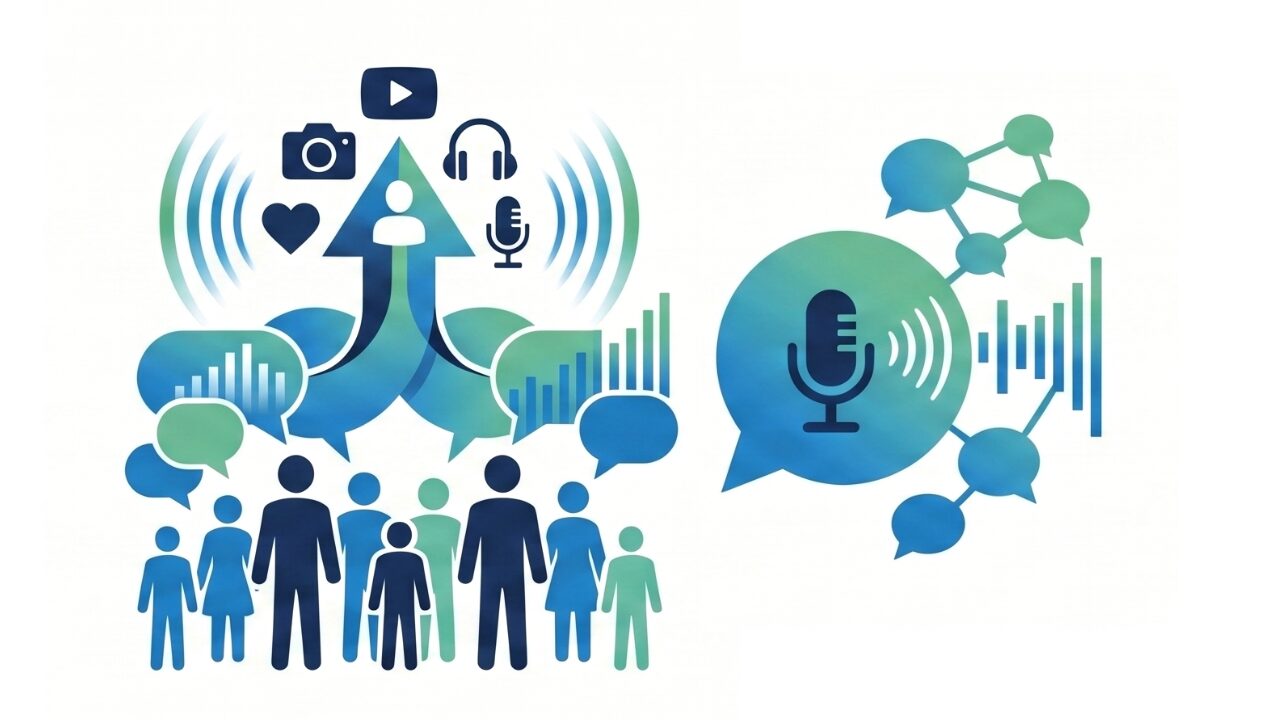
The Journalism & Design Lab has mapped the range of roles people play in community information ecosystems, not as traditional journalists, but as engaged community members. What’s striking about that framework isn’t how specialized the roles are. It’s how ordinary they are when you strip away the professional framing.
Documenting is just paying attention and keeping a record. Convening is bringing people together to talk about something that matters. Storytelling is making someone else’s experience visible to the people who need to understand it. Verifying is checking whether something is actually true before you pass it on. Distributing is making sure the right people can find what they need.
None of these require a press credential. None of them require a broadcast license or a journalism degree. They require curiosity, care, and a willingness to treat civic life as something you participate in rather than something that happens to you.
When enough people in a community are playing these roles, formally and informally, professionally and as neighbors, something important happens. The community becomes more legible to itself. People can see what’s being decided, understand what it means, and find their way into the conversation.
What infrastructure makes possible
Individual acts of civic engagement matter. But they’re more powerful when they have infrastructure to build on: shared platforms, accessible records, consistent coverage, and the organizational capacity to keep showing up even when it’s not convenient.
This is what community media organizations do at their best. Not as the sole answer to the sensemaking gap, but as a bearing wall, the structure that makes it possible for other things to stand. They maintain the record of public meetings so residents don’t have to choose between attending and knowing what happened. They provide platforms where community voices can be heard beyond their immediate circles. They build the connective tissue between civic institutions and the people those institutions are supposed to serve.
That work is less visible than a breaking news story or an investigative report. But it’s foundational. A community that can’t access its own record, can’t hear its own voices, or can’t follow the thread of decisions being made on its behalf is a community flying blind, regardless of how much content is available online.
How to participate
If you live in a community with a public media organization, a community access channel, or a local civic media outlet, you already have infrastructure to build on. The question is whether you’re using it.
Watch a public meeting. Not because you have to attend in person, but because the record exists and you have a right to it. Make a comment during a public hearing. Share a story from your neighborhood that deserves a wider audience. Show up to a community conversation and say what you actually think.
These aren’t heroic acts. They’re ordinary ones. But ordinary acts of civic engagement, practiced consistently by enough people, are how communities maintain the capacity to understand themselves and to shape what comes next.
You don’t need a press credential. You just need to show up.

